Last updated November 21, 2026
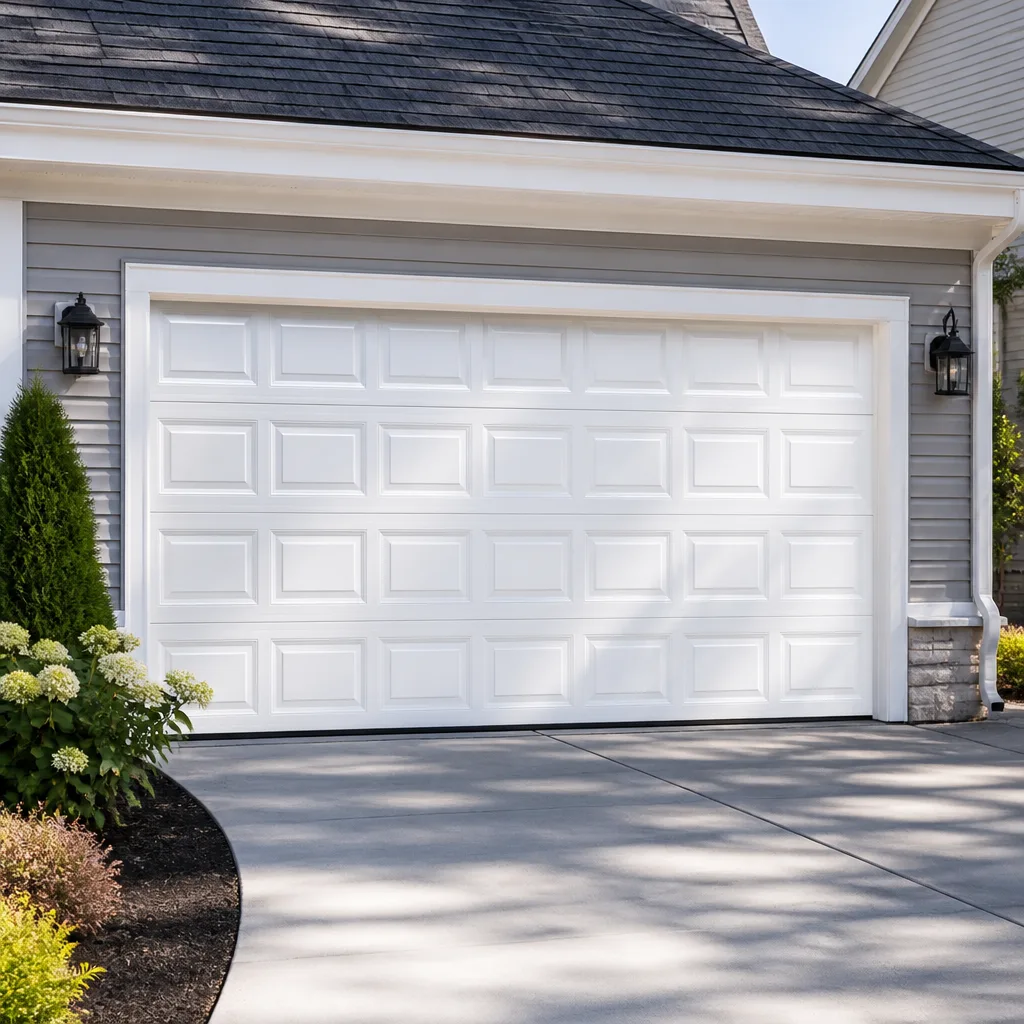 Raised-panel steel
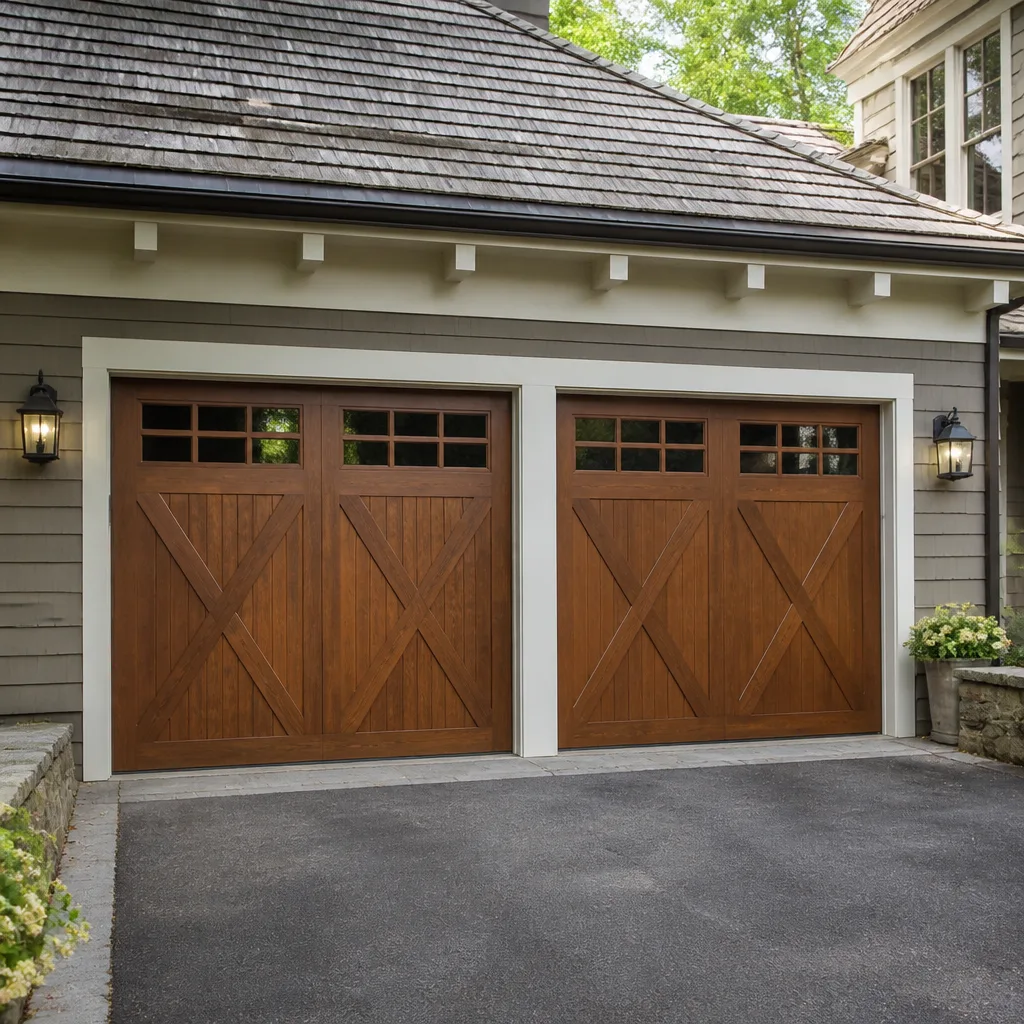 Carriage house
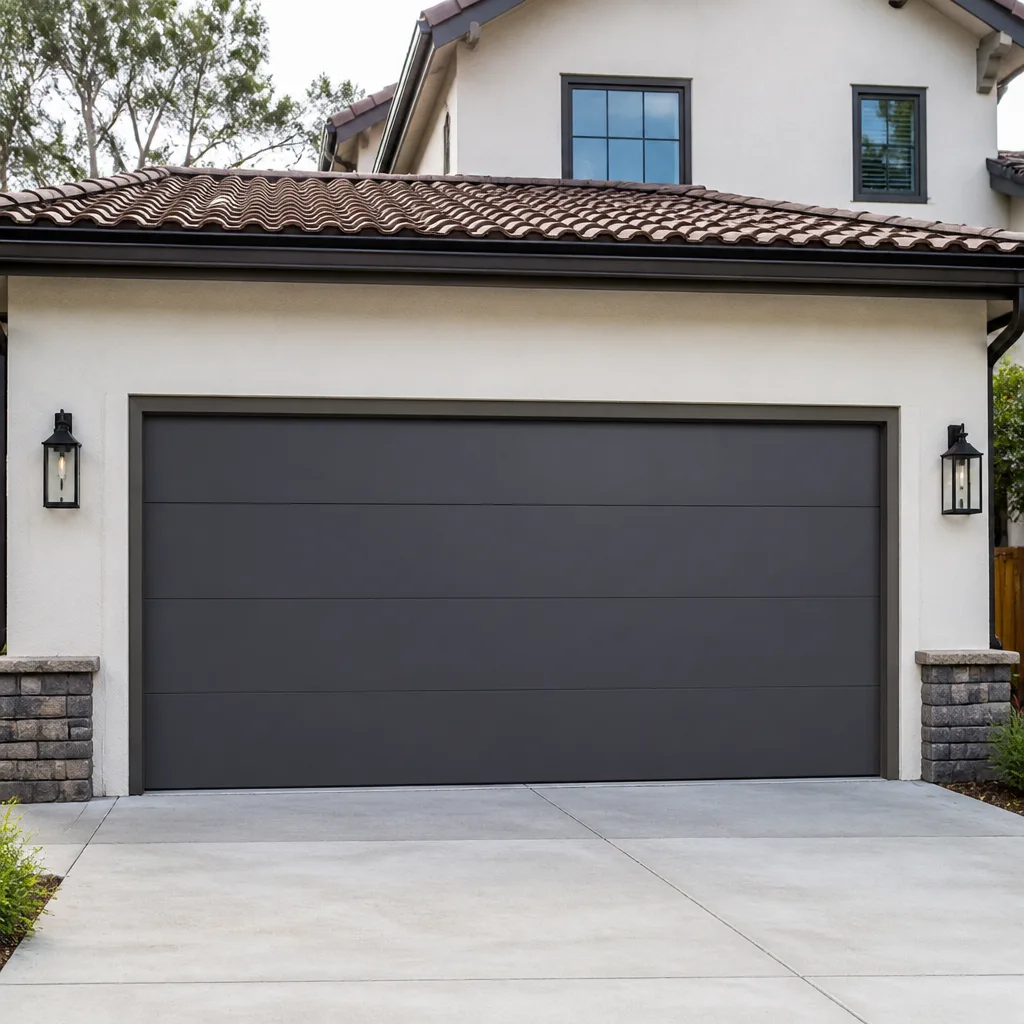 Modern flush
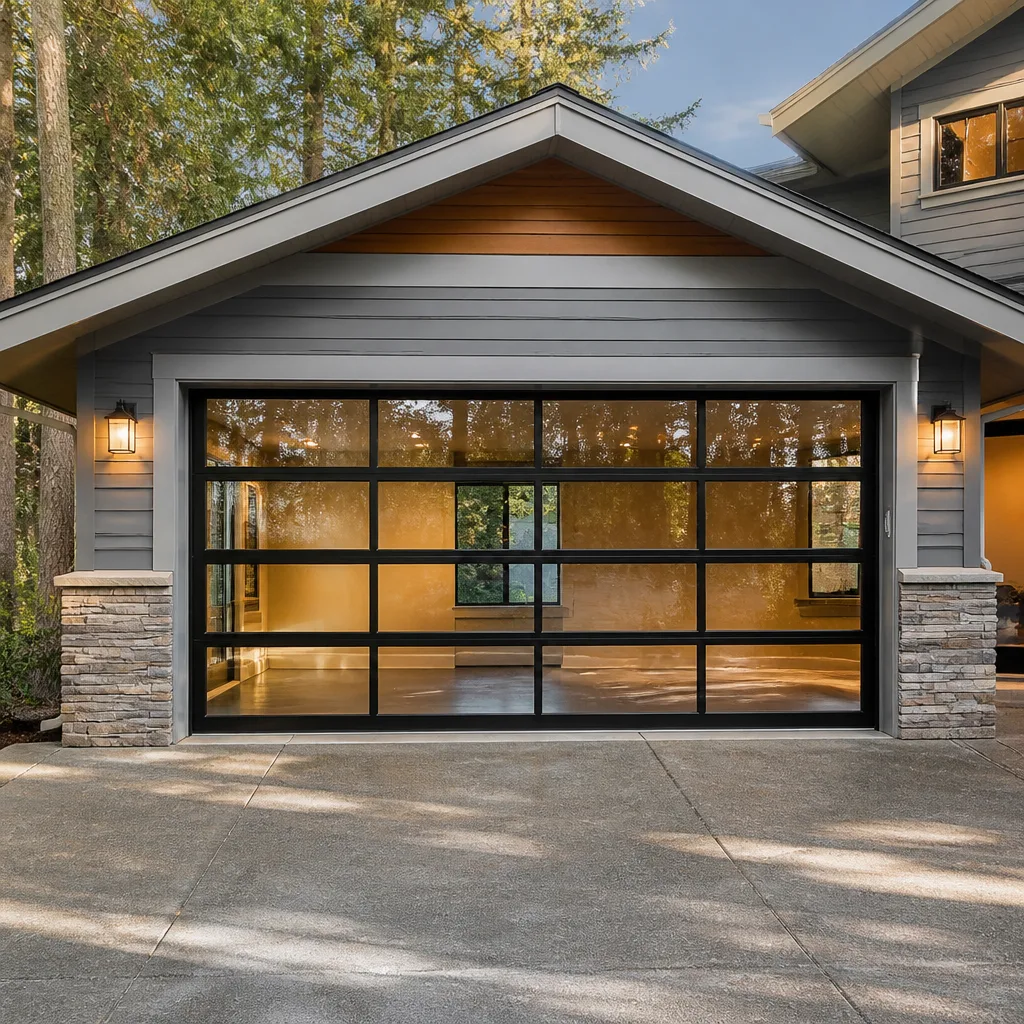 Full-view glass
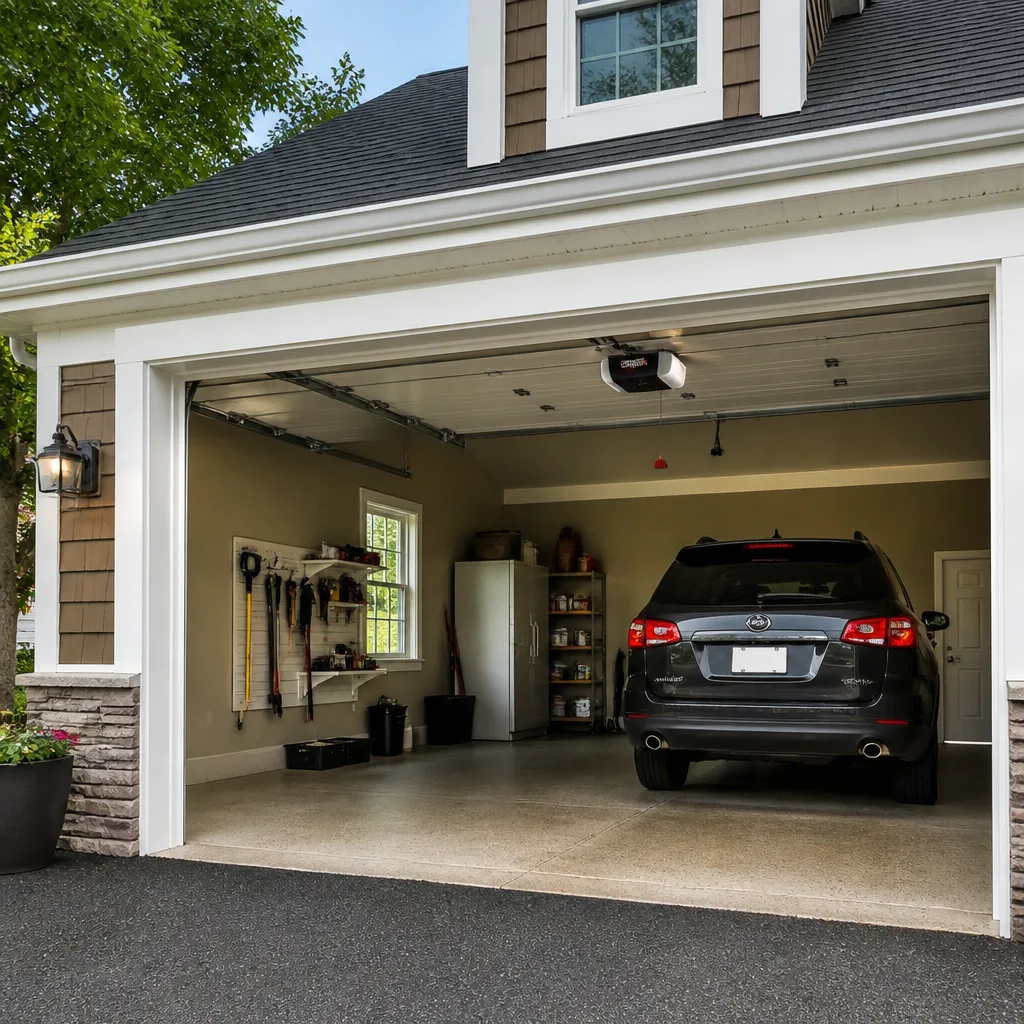 LiftMaster openers
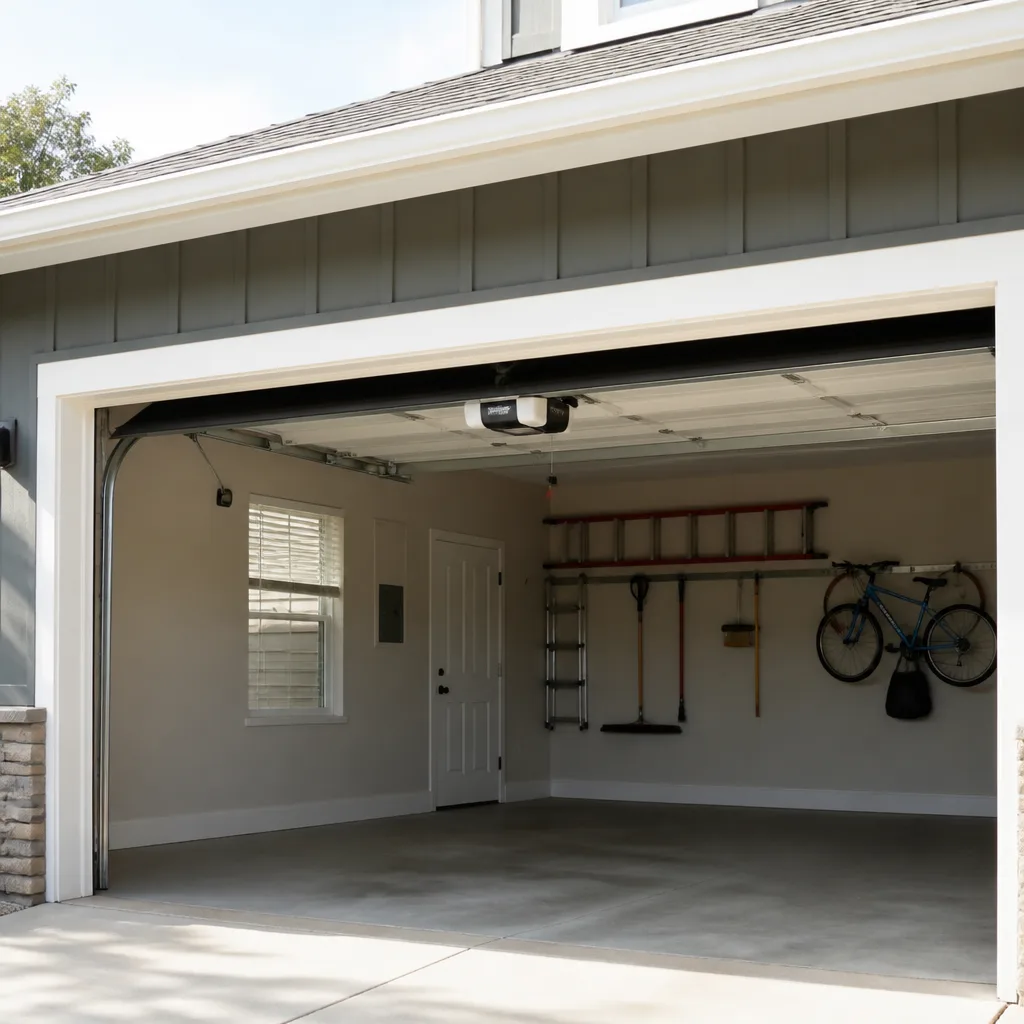 Chamberlain openers
Full 25-point door and opener safety check with every visit - springs, cables, rollers, tracks, and your LiftMaster or Chamberlain opener included
You get a price before we start. It does not change when the pro arrives.
Get your free estimateThe Complete Guide to Garage Doors in Northgate
Most “complete guides” describe a generic suburban garage. Northgate doesn’t have one. You’ll find a 1962 ranch-style home on the same block as a 2023 townhome stack, and those two doors need completely different approaches, parts, and opener systems. That age gap is the single most useful thing to understand about garage doors in Northgate, and it’s what this guide is built around. We’ll walk through the component systems behind any door, explain which setups show up most in this neighborhood and why, cover the brands you’re most likely to find on a Northgate driveway, and help you figure out whether you’re facing a cosmetic fix or a structural replacement. No filler.
Quick Answer
Garage doors in Northgate split into two broad eras: older ranch homes with low-headroom openings and extension-spring or early torsion systems, and newer infill townhomes built with tighter clearances and side-mount openers. Which one you have determines the springs, track style, opener type, and even the brand ecosystem you’ll be shopping for. The repair itself is almost always workable within a day once the right parts are on hand.
Styles & brands we work with
- Raised-panel steel
- Carriage house
- Modern flush
- Full-view glass
- LiftMaster openers
- Chamberlain openers
Table of Contents
- How Northgate’s Housing Stock Shapes Your Door
- The Full Component Breakdown: What’s Actually in Your Garage
- Torsion vs. Extension Springs: Which One Do You Have?
- Opener Types: Trolley vs. Jackshaft and When Each Makes Sense
- The Brand Ecosystem on Northgate Driveways
- How Pacific Northwest Moisture and Freeze-Thaw Affect Your Door
- Cosmetic Upgrade or Structural Replacement: How to Tell
- Parts Availability and Why It Changes Your Repair Timeline
How Northgate’s Housing Stock Shapes Your Door
Northgate’s rapid densification has produced three distinct generations of housing, and each one carries its own set of garage door realities.
Start with the mid-century ranch homes, built through the 1950s and 1960s. These garages were often framed with lower headroom and single-wide doors, and many still run original-style track setups. Extension springs were common in this era, mounted above the tracks on either side. Plenty of these homes have had a door replaced once or twice but kept the original hardware, so you’ll find a modern panel paired with decades-old springs and rollers.
Next come the 1980s and 1990s builds, which brought wider double doors, torsion springs mounted on a center shaft, and the first wave of chain-drive openers. This is the generation where opener wiring and safety sensors started showing up as standard, and where we see the most mixed-and-matched hardware today.
Then there’s the 2020s townhome and infill construction, which is reshaping Northgate block by block. These homes were built with tighter tolerances, often smaller single-car garages, and side-mount jackshaft openers to keep ceiling space clear. Some are single-skin steel, some are insulated composite, and the clearances are deliberately compact.
The practical effect: two doors on the same street can use entirely different springs, openers, and mounting points. Before you order a part or book a repair, identify the era of your garage. That one step saves a lot of guesswork. For anything urgent, our garage door repair team can usually diagnose which generation you’re working with in a single visit.
The Full Component Breakdown: What’s Actually in Your Garage
A residential garage door is a system, not a single part. Here’s what’s actually mounted on your wall, ceiling, and door panels, and how each piece fails.
- Door panels – Steel, aluminum, wood, or composite. Steel dominates Northgate for its durability and low maintenance; wood shows up on older ranch homes that were built with wood doors originally.
- Torsion or extension springs – The counterbalance system. Torsion springs mount on a horizontal shaft above the door; extension springs run along the tracks on either side. Both carry enormous stored tension.
- Tracks – Vertical and horizontal rails that guide the door. Dents, misalignment, or loose brackets push the door off its rollers.
- Rollers – Steel or nylon wheels inside the track. Nylon runs quieter, and it’s what most modern doors use.
- Hinges and brackets – Connect panels to one another. They wear out, especially in doors that cycle many times a day.
- Cables and drums – On torsion systems, the cables wind around drums and lift the door. A snapped cable is a serious hazard.
- Bottom seal and weatherstripping – The rubber strip along the floor plus brush or rubber seals around the frame. This is your moisture barrier.
- Opener and safety sensors – The motor, rail, and two photo-eye sensors near the floor that stop the door if something crosses the beam.
When a door “just stops working,” the cause is nearly always one of three things: a spring failure, an opener fault, or a track and roller issue. Everything else tends to be secondary. Knowing which category you’re in makes the repair conversation shorter.
Torsion vs. Extension Springs: Which One Do You Have?
Torsion springs mount on a shaft above the door and twist to store energy; extension springs stretch along the sides of the tracks. Torsion systems are standard on modern doors because they last longer, are quieter, and provide more balanced lifting. Extension springs are most common on older Northgate ranch homes built before torsion became the default.
Here’s how to tell them apart without touching anything:
- Look directly above the closed door. If you see a horizontal metal shaft with coiled springs wrapped around it, you have torsion springs.
- Look along the side tracks near the top of the door. If you see long springs running parallel to the tracks, you have extension springs.
- Count. Torsion setups usually have one or two springs on the shaft. Extension setups have one spring per side.
This distinction matters because the repair approach is different for each. A torsion spring is one spring, and a matched pair on a two-spring shaft is usually replaced together, which means the pair costs roughly twice a single. Extension springs are also replaced in balanced pairs to keep the door level.
This is a safety job, not a DIY fix. A torsion spring is under hundreds of pounds of tension when wound, and an extension spring is under similar tension when the door is down. One wrong move with the winding bars or a disconnected cable can cause serious injury, and it’s genuinely one of the few repairs we’d never suggest attempting without proper training and tools. If either spring is broken, call us or another qualified pro before you touch anything. Our techs work with torsion and extension springs daily, and we can usually identify the type and get the right replacement scheduled once we’ve confirmed the setup.
Opener Types: Trolley vs. Jackshaft and When Each Makes Sense
Trolley openers pull a belt, chain, or screw-driven arm along a ceiling rail to lift the door. Jackshaft openers mount to the side of the door on the wall, next to the torsion shaft, and are common in newer Northgate townhomes. Which one you have depends almost entirely on headroom and ceiling clearance.
The trolley (rail) style is the standard for most detached and attached suburban garages. It needs ceiling height, since the rail runs directly above the door on a straight or curved arm. Chain-drive versions are the loudest and most common on older homes. Belt-drive and screw-drive versions are quieter and appear more often on newer installs.
Jackshaft openers solve a specific problem: no overhead space. You’ll see them in newer townhome garages with a low ceiling, or where a homeowner has a storage rack or a low-clearance ceiling. Instead of pulling from above, they turn the torsion shaft directly from the side.
There’s a third category homeowners ask about: side-mount or wall-mount openers, which are essentially jackshaft units designed for that same low-headroom use. They’re not interchangeable with trolley systems without other changes to the door and spring setup.
Opener failures almost always trace back to one of a handful of causes: worn gears, a failed logic board, a remote that needs reprogramming, misaligned safety sensors, or a stripped belt. Diagnosing any of these is fast if you know the brand. Our garage door opener repair work covers LiftMaster, Chamberlain, Genie, and Craftsman systems, which together account for most openers in Northgate homes.
The Brand Ecosystem on Northgate Driveways
The door and opener brands on Northgate driveways follow the housing-age pattern closely. Knowing which brand is on your garage makes a real difference to how fast a repair moves.
For openers, LiftMaster and Chamberlain dominate the newer builds and most retrofits. Genie and Craftsman are extremely common in 1990s-era installs, and a lot of those units are still running. For doors, Clopay and Amarr show up most often on newer construction and replacement doors, while Wayne Dalton and Raynor turn up regularly on mid-century homes and mid-generation homes that have had a second door installed.
Here’s the practical point. Plenty of garage door companies work across one or two manufacturers, and if your door isn’t from that line, they’re ordering parts through a third party and waiting. We stock and supply parts directly, so we work on the brand already in your garage. That’s true across LiftMaster, Chamberlain, Genie, Clopay, Amarr, Wayne Dalton, Craftsman, and Raynor, the eight brands we’re most factory-familiar with.
The bigger consequence is timelines. On a spring or opener failure, parts on hand mean faster resolution. If your door needs a replacement panel from a specific manufacturer, we can source it and give you a realistic schedule. Call (844) 685-3487 for a free estimate.
How Pacific Northwest Moisture and Freeze-Thaw Affect Your Door
Northgate’s wet winters and the freeze-thaw cycles at higher elevations nearby put real pressure on the parts of a garage door that most homeowners never think about: seals, paint films, and the bottom of the panel.
Moisture is the slower killer. Standing water at the bottom of the door, driven rain against the frame, and months of humidity work on the seal and the paint of any steel door. Once the paint film cracks, rust starts at the bottom edge or the panel seams. Wood doors soften and swell at the joints if water sits. The bottom seal is the first line of defense, and it’s also the cheapest part to replace. If the rubber along the floor is cracked, hardened, or leaving gaps you can see daylight through, replace it before the wet season.
Freeze-thaw is the sharper problem. Temperatures around Northgate and in the higher-elevation areas nearby cycle through freezing nights and warmer days in winter. Water that gets into a small gap, a cracked seal, or a paint chip can freeze, expand, and widen the opening over a season. That’s why we recommend keeping the bottom seal soft and the paint intact. On wood doors, check the lower joints and the frame; those are the spots where a small gap becomes a big one.
Material choice follows from that. Steel is the lowest-maintenance fit for most Northgate homes if the paint and seal are maintained. Wood fits the character of older ranch homes but needs more frequent inspection. Composite is a middle ground when moisture is a persistent problem. Whichever you choose, the frame and threshold matter as much as the door itself.
Cosmetic Upgrade or Structural Replacement: How to Tell
One of the most useful decisions in this guide is figuring out whether you’re looking at a cosmetic upgrade or a structural replacement. They’re not the same thing, and plenty of homeowners have paid for a cosmetic fix and discovered a week later that the door was actually at the end of its life.
A cosmetic upgrade covers the door and its finish: a newer panel style, upgraded hardware, a new opener, or weatherstripping replacement. The door itself is sound, and it lifts and balances normally.
A structural replacement is triggered when the door or its supporting system has failed in ways a new panel won’t fix. Signs include:
- Deep rust through the steel panel, not just surface, especially at the bottom edge and seams.
- Bent, warped, or misaligned panels that no longer hang evenly.
- Repeated track damage after being fixed once or twice.
- Spring failures that keep recurring, or a spring shaft or mounting bracket that’s been stressed.
- Wood rot at the panel joints or on the frame, so the door won’t close flush.
- An opener that no longer matches the door’s weight, with a rail or shaft that’s worn enough that repairs keep coming back.
The honest test is this: if the panel, frame, and spring shaft are all structurally sound, a cosmetic upgrade is money well spent. If two or more of those are damaged, a full replacement is usually the cleaner move, and our garage door installation work is built for exactly that decision. We measure the opening, weigh the door, and match the springs and opener to it before we order anything.
Parts Availability and Why It Changes Your Repair Timeline
The single biggest variable in any garage door repair timeline is parts availability. When a tech has to order a spring, a gear kit, or a logic board from a third party, a job that should be resolved in one visit turns into two or three visits over days or weeks.
Here’s the sequence we aim for on a typical repair:
- Diagnose the failure (spring, opener, track, cable, or sensor).
- Confirm the brand and door weight to match the right part.
- Pull the part from inventory if we have it on hand.
- Quote the price before any work starts, and confirm it in writing.
- Complete the repair and test the door’s balance and safety sensors.
On a spring failure, the diagnosis usually takes minutes. On a logic board or specialized opener part, the match has to be exact. That’s why we keep parts for the eight brands we most commonly see in Northgate garages: LiftMaster, Chamberlain, Genie, Clopay, Amarr, Wayne Dalton, Craftsman, and Raynor. If your door is one of those, we can often resolve it with one visit.
If it’s a full door replacement, the timeline is different by design. That work is measured, ordered, and scheduled around your opening, so there’s no reason to rush it. For repair work, our team offers free estimates. Call (844) 685-3487 to get an exact quote.
Common Mistakes to Avoid
- Assuming any garage door is the same as any other. The clearance, spring type, and opener differ between a 1960s Northgate ranch and a new townhome down the street, so a generic parts order won’t fit both.
- Replacing only one spring when you have a pair. On a torsion system, replacing one spring of a matched pair throws the door off balance and usually shortens the remaining spring’s life. Replace the pair.
- Ignoring the bottom seal through the wet season. A cracked or hardened seal lets water sit against the panel and the frame. It’s the cheapest part on the door and the first one to fail.
- Trying to fix a spring yourself. Torsion and extension springs are under extreme tension. One slip can cause serious injury, so treat them as a professional repair from the start.
- Buying an opener without checking the door’s clearance. A standard trolley opener won’t fit a Northgate townhome with a low ceiling. Check the headroom and door weight before you buy.
- Calling a general handyman for a spring or opener problem. Garage doors are a specialized system. A generalist may replace the wrong part or leave the door unbalanced.
- Choosing a door based only on looks. Material, insulation, and clearance should drive the choice. The finish is the last decision, not the first.
See the difference
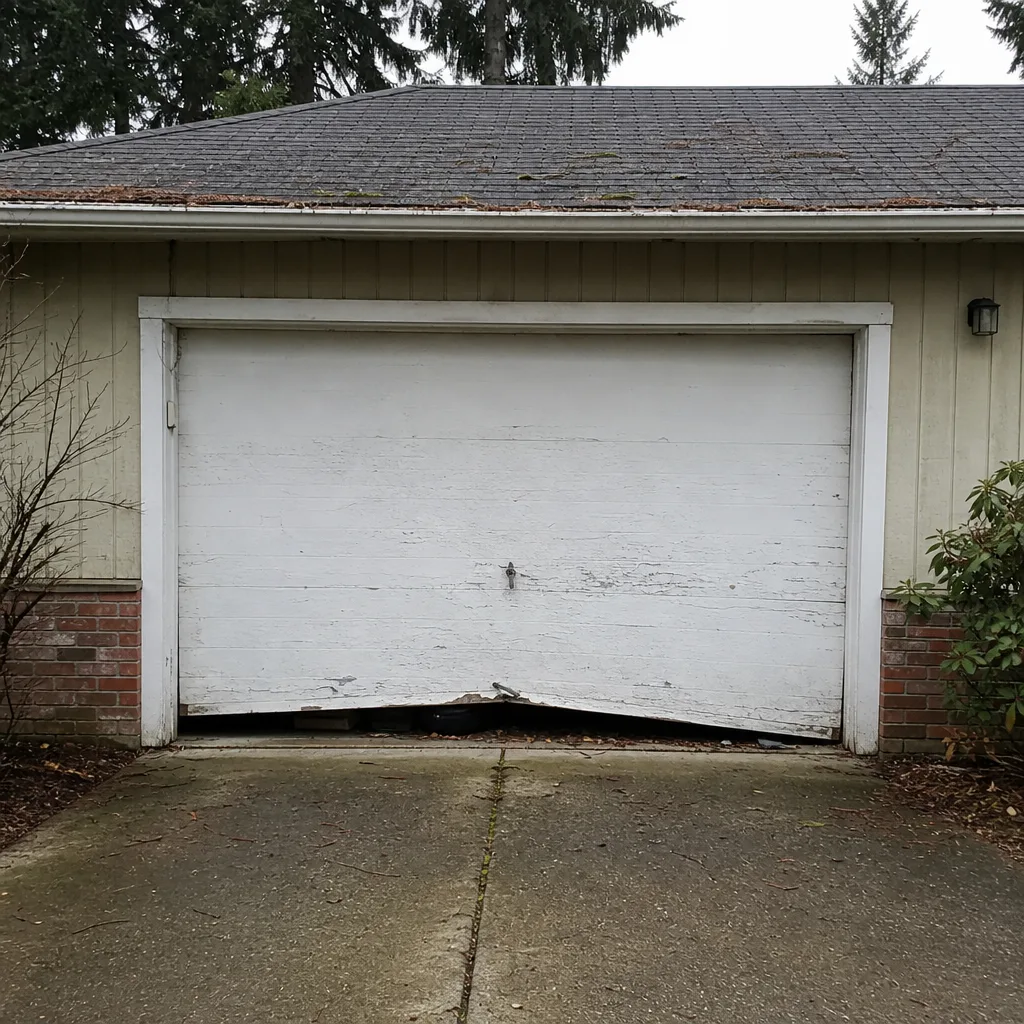 Before
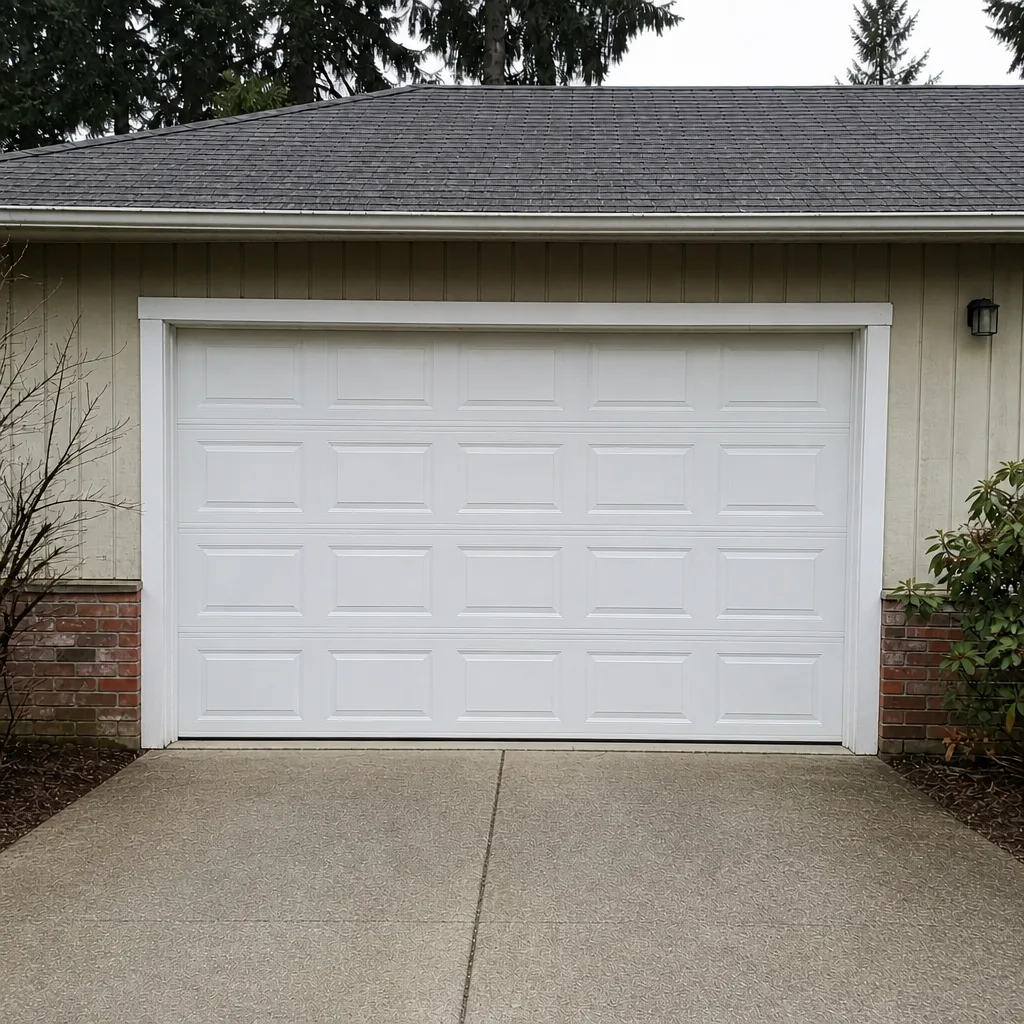 After
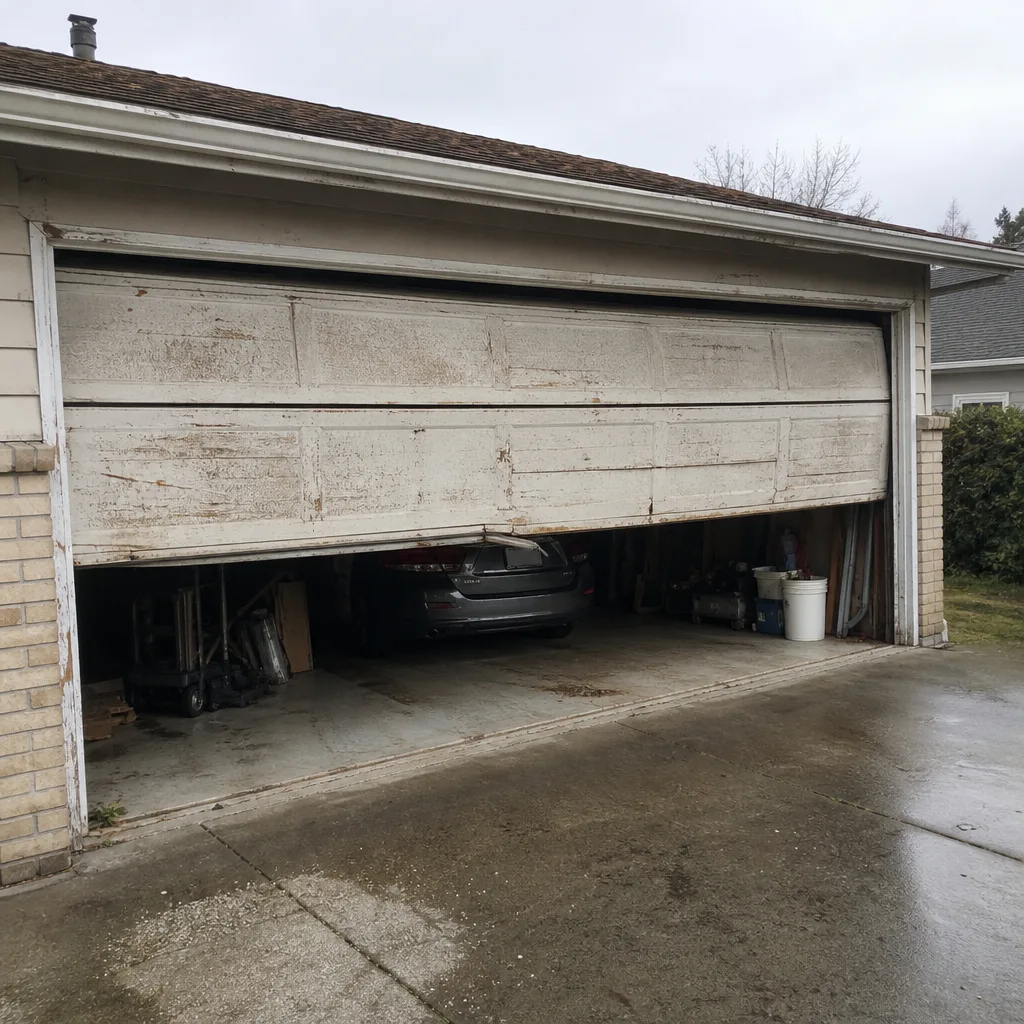 Before
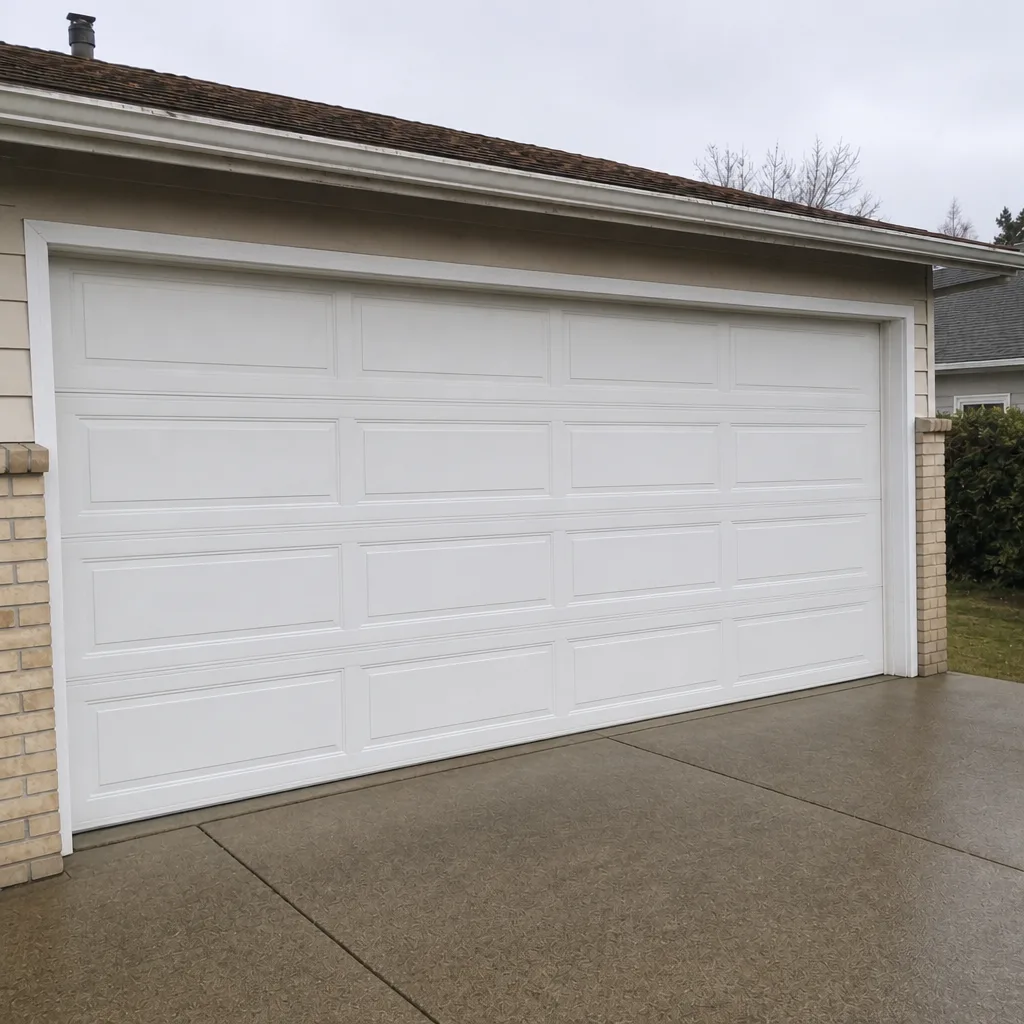 After
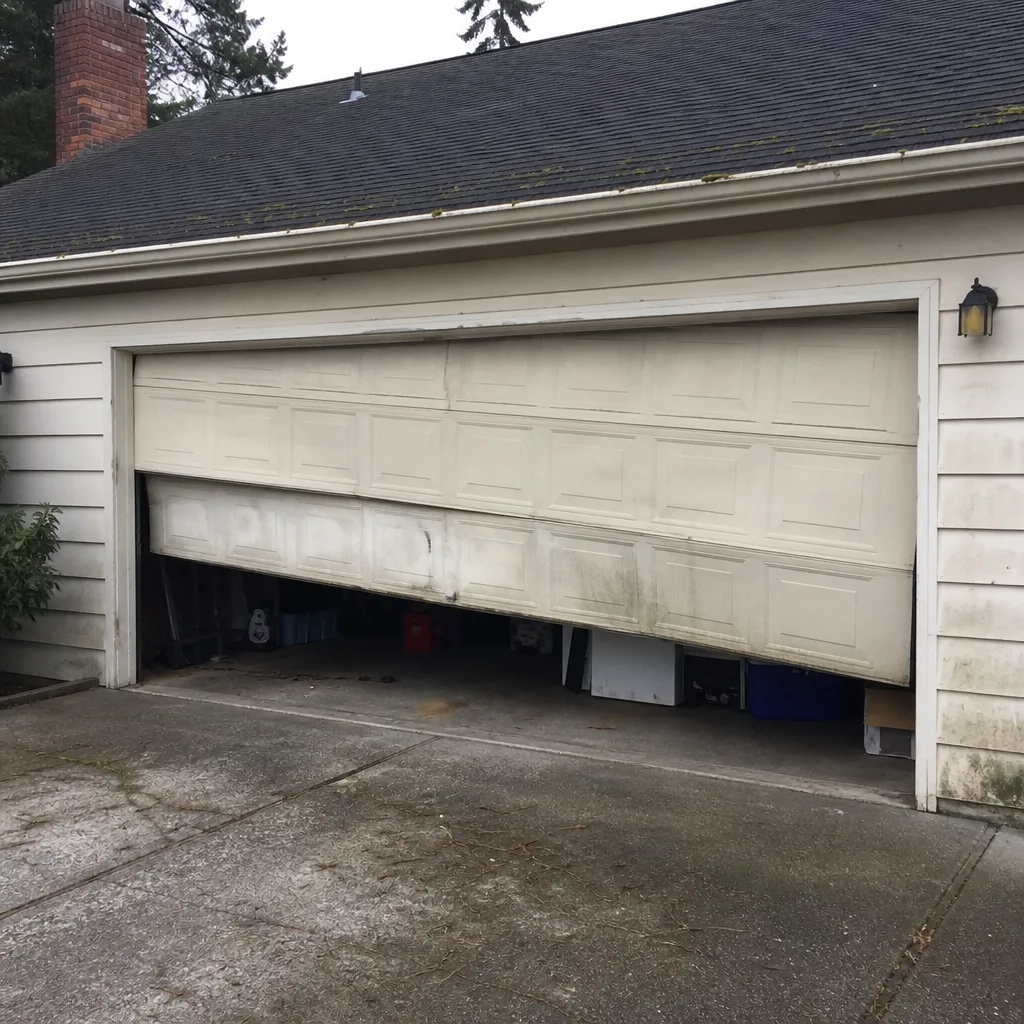 Before
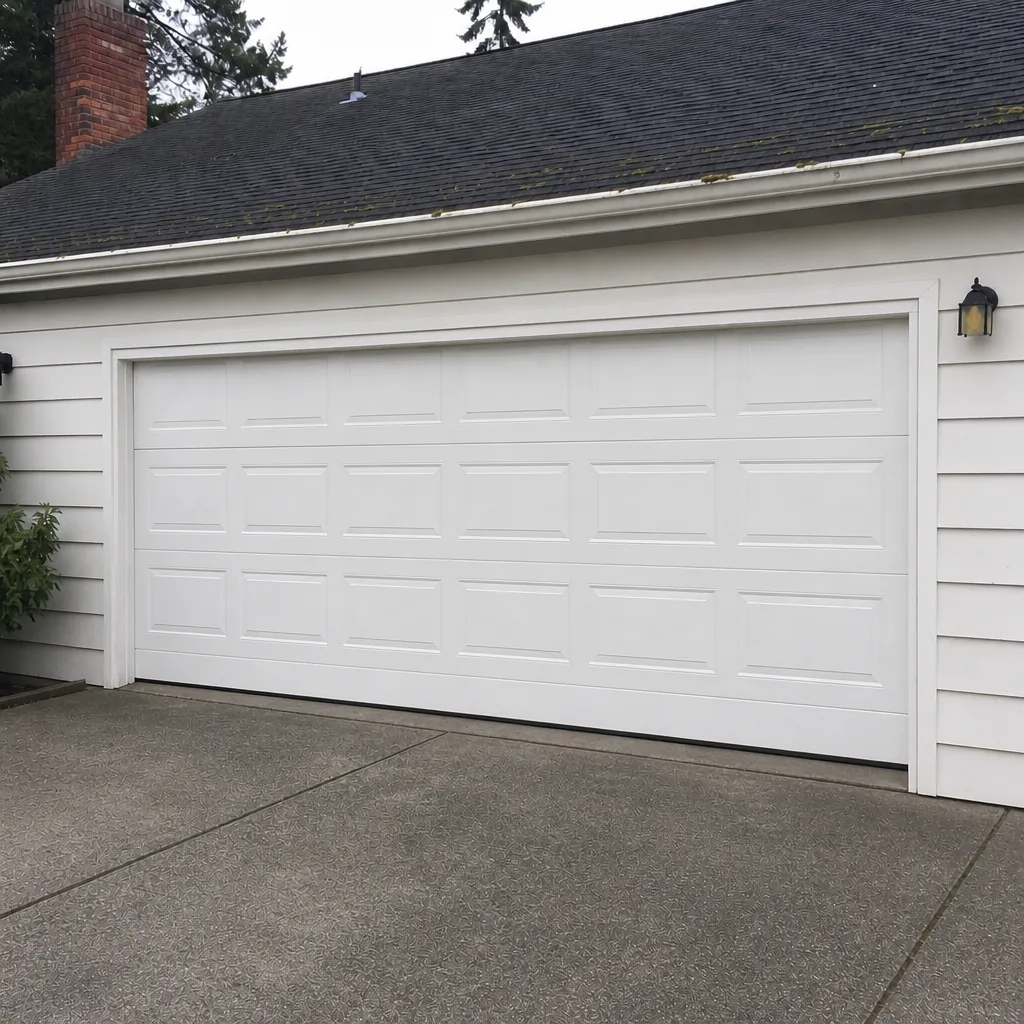 After
When to Call a Professional
Call a professional for anything involving a broken spring, a snapped cable, a door that’s off its tracks, or a door that won’t stay down. Those are the situations where a wrong move can cause serious injury or more damage to the door. You should also call when an opener runs but the door doesn’t move, when the door reverses partway down, or when the safety sensors won’t stay aligned, since those can signal a logic-board or wiring fault rather than a simple reset. Cosmetic issues, worn bottom seals, and noisy rollers are fine to schedule whenever it’s convenient. Garage Door Repair Northgate offers free estimates in Northgate. Call (844) 685-3487.
Frequently Asked Questions
It depends on the failure: a spring repair, an opener fault, and a track realignment all fall in different ranges, and the estimate we give you is based on what we see on the door. We provide a written quote before any work begins, so the number you agree to is the number you pay. Call (844) 685-3487 for a free estimate and an exact figure.
For many spring, opener, and track repairs, yes. We offer same-day service where the schedule allows, and fast dispatch from 7am to 7pm. Call (844) 685-3487 and we’ll confirm availability for your Northgate address.
No. We quote the work and agree on the price before we start. If we find something the written quote didn’t cover, we’ll explain it and get your approval first, so nothing gets added without your consent. Call (844) 685-3487 to get the estimate.
The local pro we connect you with is licensed and insured as their state requires. Our network technicians have up to 13 years of experience, and they work on torsion and extension springs as a routine part of their job. Call (844) 685-3487 if you’d like to confirm details for your repair.
We don’t recommend it on a matched pair. If one spring of a pair has failed, the other is usually at a similar point in its life, and replacing only one throws the door off balance and often shortens the remaining spring’s life. The pair costs roughly twice a single-spring repair, and it’s the standard replacement on a two-spring shaft. Call (844) 685-3487 to schedule.
Most cities require a permit for a full door replacement, though the rules vary by jurisdiction, so it’s worth asking your city’s building department directly before you schedule the work. A repair (springs, opener, tracks, seals) generally doesn’t require one, but a replacement door does in many places. Our team can walk you through what your install involves. Call (844) 685-3487 with questions.
The Bottom Line
The main thing to take away from this guide is that Northgate garages aren’t one thing. A mid-century ranch and a 2020s townhome have different spring systems, different opener types, and different doors, and the right repair or replacement follows from identifying which one you have. Once you know that, the parts, brands, and timelines fall into place. Keep the bottom seal and paint intact through the wet season, treat springs as a professional-only repair, and get a written estimate before any work begins. If you need help with a door, opener, or installation, call (844) 685-3487.
Written by the team at Garage Door Repair Northgate.